UofM School of Information
Product Designer
Academic Project
3 months
Snapshot
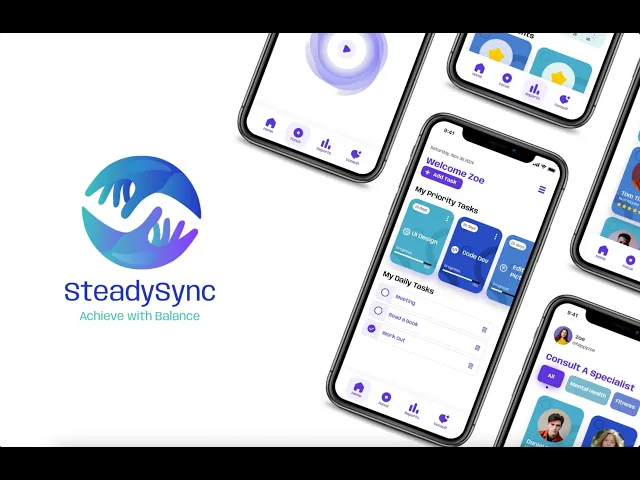
SteadySync is a mobile productivity app designed to integrate task management and mental wellness into a single, cohesive system. The project explores how productivity tools can support sustained focus without reinforcing burnout. Through user interviews, iterative prototyping, and usability testing, I designed a calm, action-oriented interface that balances daily execution with long-term well-being.
Core Problem
Most productivity tools optimize for output, not sustainability.
Task managers and wellness apps exist in isolation
Users juggle multiple tools, increasing cognitive overhead
Short-term task urgency overshadows long-term goals
Focus sessions require setup friction that disrupts flow
The result: productivity systems amplify burnout instead of preventing it.
Approach
Strategy
Conducted user interviews to identify burnout triggers and workflow gaps
Reframed productivity from task completion to balanced momentum
Designed system to integrate wellness into daily planning
Interaction & Systems
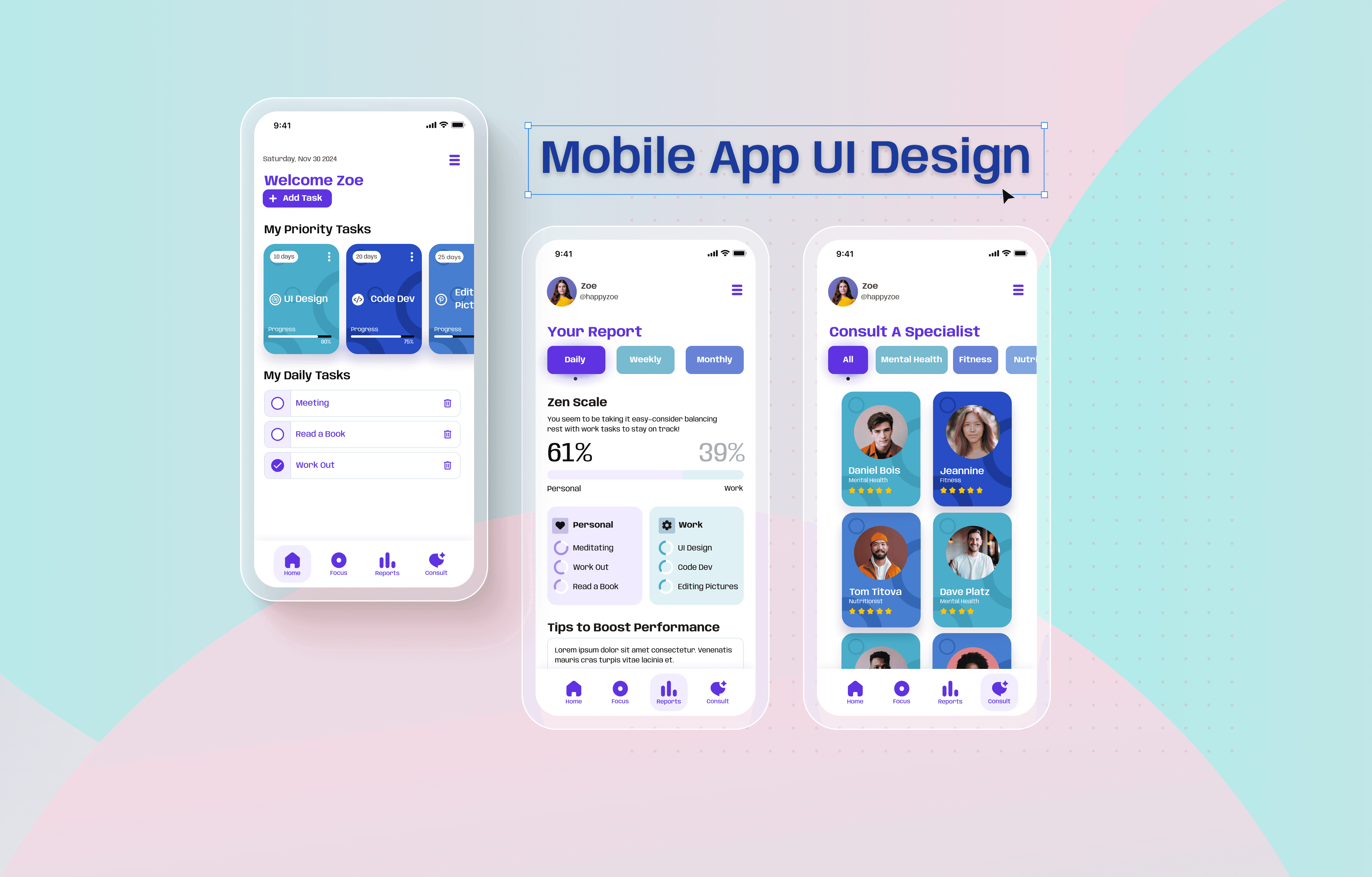
Structured dashboard around daily priorities + wellness indicators
Reduced Focus session setup friction by prioritizing duration first
Integrated guided breaks directly into task flow
Added labeled navigation for clarity and discoverability
Execution
Iterated from low-fidelity flows to high-fidelity prototypes
Refined CTA hierarchy and task grouping
Delivered scalable mobile layout patterns in Figma
Visual Evidence
Following paper prototyping, I conducted user interviews to deepen my understanding of user needs and pain points. These conversations revealed the importance of balancing short-term task focus with long-term goal visibility, and the desire for personalized wellness breaks that fit seamlessly into daily routines. Using these insights, I developed low-fidelity wireframes emphasizing clear task separation, intuitive navigation, and improved button visibility. Usability testing at this stage informed important changes, such as reordering the Focus session interface to reduce cognitive load by prioritizing session duration before audio settings.
Outcomes
Validated task–wellness integration model through user interviews
Iteratively reduced setup friction in Focus session flow
Improved task prioritization clarity through interface restructuring
Strengthened navigation discoverability with labeled controls
Developed a cohesive mobile system balancing productivity and rest